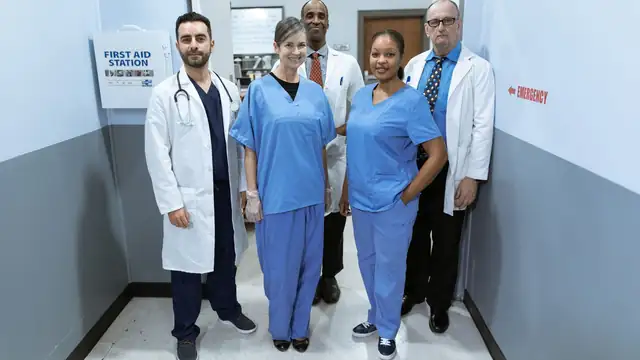
Seattle Children's built 'Pathway Assistant' with Google, trained only on its internal clinical pathway documents, to guide clinicians through diagnosis and treatment workflows for 70+ pediatric conditions. Its CMIO told HealthSystemCIO the assistant achieves more than 98% accuracy after tuning and is being rolled out in emergency and urgent care.
Reported outcomes
Outcomes are reported exactly as stated by the source; we have not independently audited them.
How it works
- Trained exclusively on Seattle Children's internal pathway documents.
- Engages clinicians in multi-step dialogues that adapt to patient details.
- Standalone by design: no EHR connection and no PHI.
Risks & compliance
- Clinical decision support only; not medical advice
- Accuracy is self-reported by the organization
Healthcare cases cover operational and commercial workflows. Nothing here is medical advice or a claim about a device's or drug's efficacy.
Editor's notes
- Accuracy figure is attributed to Seattle Children's CMIO in the article.
Tools mentioned & how to build it
Disclosure: Some links may earn us a commission; it never affects grades. Tools are listed by fit to this case, never by payment.
Tools mentioned
- Gemini / Vertex AI (Google Cloud)
Google Cloud's model and agent platform.
Build a version yourself
- Lindy
No-code AI agents for inbox, scheduling and sales admin. - Fireflies.ai
AI meeting notes that sync summaries and action items to your CRM.
Sources
“According to Lin, the assistant achieves more than 98% accuracy after repeated tuning and validation, and is being rolled out in emergency and urgent care settings.”Seattle Children's Builds AI Assistant & Governance Model to Advance Pediatric Care
Grade rationale: Named organization, quantified outcome, independent trade publication (figure is the organization's own). Automated check on Oct 17, 2026: 1/1 quotes and 1/1 outcome claims matched the source. Compiled by the Agent Casefile research desk (AI-assisted; see methodology). Spot an error? Request a correction.